
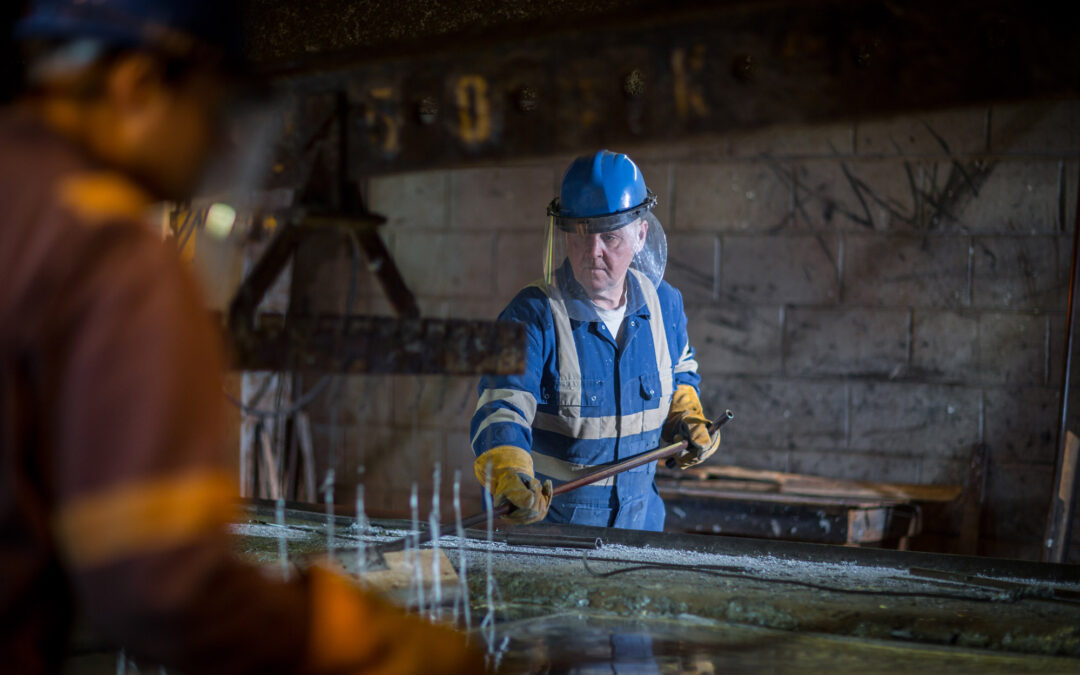
Hot dip galvanising is a well-established method of protecting steel from corrosion and is used across a wide range of industries and applications in the UK. While the process itself is straightforward, decisions made earlier in a project can have a significant impact on how galvanising performs in practice.
When Should You Involve a Galvaniser in a Steel Fabrication Project?
Planning a fabrication project?
It may help to speak to a galvaniser before:
✓ Finalising drawings
✓ Confirming drainage / venting
✓ Ordering material
✓ Welding hollow sections
✓ Locking in delivery timelines
A short discussion early in the design stage can prevent rework later.
How hot dip galvanising works (in simple terms)
Hot dip galvanising protects steel by coating it with zinc, forming a durable barrier against corrosion.
Before galvanising, steel items are prepared to remove surface contaminants. Once prepared, the steel is immersed in molten zinc, where a metallurgically bonded coating forms on the surface. After removal from the zinc bath, the coating cools and solidifies, leaving the steel protected.
While the galvanising process is well defined, the way steel is designed, fabricated and handled beforehand can influence both efficiency and the final result.
For a more detailed explanation, you can view our full galvanising process guide.
Practical decision points to consider before galvanising
Design and fabrication
The design of a steel item can affect how easily it can be galvanised. This includes:
- Enclosed sections
- Drainage paths
- Access for handling
Considering galvanising requirements during design and fabrication can help avoid later changes.
Manufacturing
Where steel is fabricated prior to galvanising, coordination between fabrication and galvanising helps ensure designs are suitable for processing. As part of the wider Ritchie group, we work alongside in-house manufacturing teams to identify practical considerations early and reduce rework.
Size, weight and handling
The size and weight of fabricated items affect how they are processed and handled. Larger or unusually shaped fabrications may require additional planning to ensure safe and efficient processing.
Intended environment
The intended environment and required level of corrosion protection are key considerations. Different environments place different demands on protective coatings and influence preparation and processing requirements.
In more aggressive or offshore environments, galvanising may be combined with additional protective coatings, such as powder coating, to extend service life. Early discussion helps ensure correct preparation and sequencing where multiple layers are involved.
Working on a design now?
Our team can review fabrication details before galvanising is specified.
→ Contact the galvanising team
Project timing
Galvanising is often one stage within a wider fabrication and delivery programme. Allowing time for galvanising within the overall schedule helps avoid delays later in the project. Where additional fabrication or finishing processes are involved, early discussion helps ensure all stages are properly aligned.
Common mistakes to avoid
When galvanising is considered late or treated purely as a finishing step, issues can include:
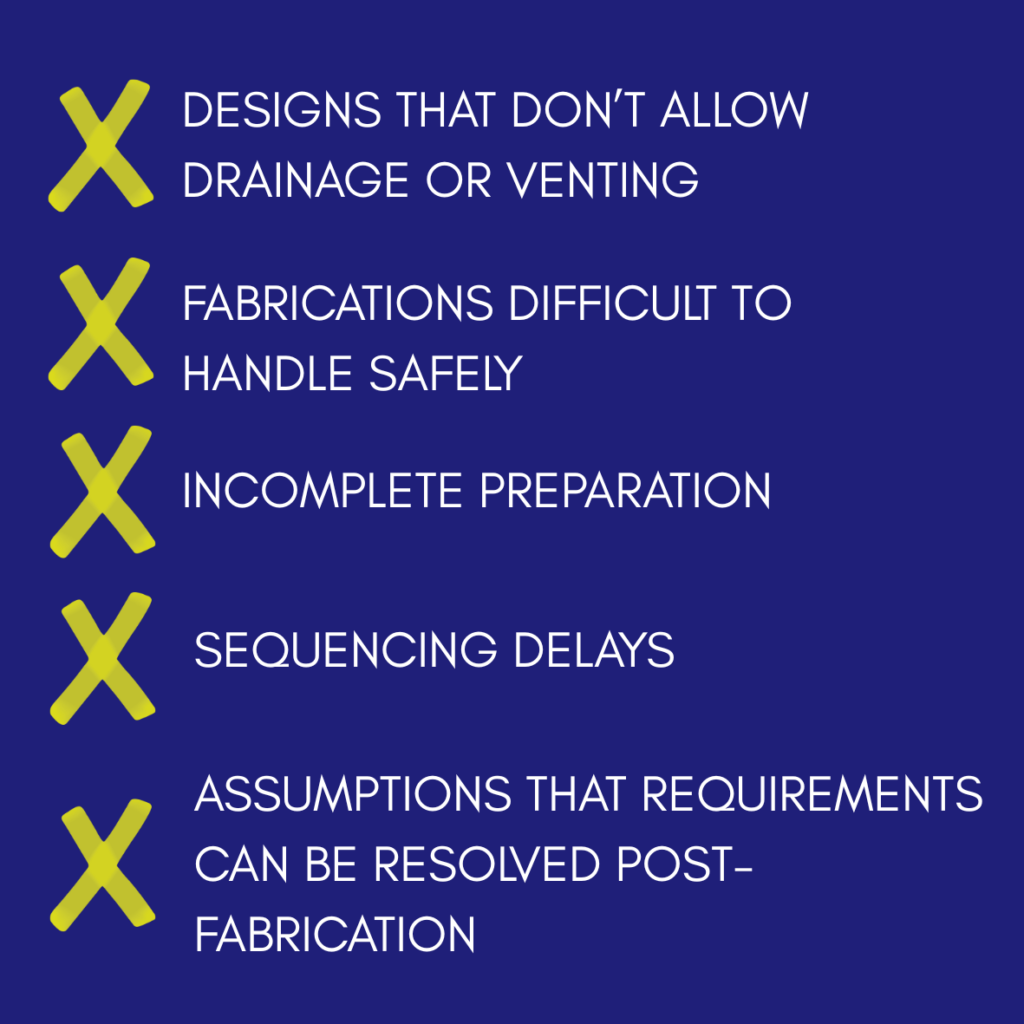
- Inefficient or incomplete preparation
- Designs that don’t allow effective drainage or venting
- Fabrications that are difficult to handle or process safely
- Assuming galvanising requirements can be addressed after fabrication
- Underestimating the impact of galvanising on project sequencing
- Not considering how galvanising fits with subsequent coating or finishing processes
These issues are usually avoidable with early consideration and discussion.
If galvanising is considered late, you may encounter:
When early consultation can help
A short conversation early in a project can help clarify what needs to be considered before galvanising. Early consultation may be particularly useful where:
- Fabrications are complex or unusual in shape
- Items are large, heavy or assembled from multiple components
- Delivery times or sequencing are tight
- Design details are still being finalised
Early discussion can help identify practical constraints and reduce the likelihood of later changes.
Next steps
Considering these points early in the design or fabrication process can help ensure galvanising is integrated effectively into the wider project.
For further information, you can:
- View our detailed galvanising process guide here
- Contact the team to discuss a specific project or application
Early discussion helps ensure galvanising is considered as part of the overall project, rather than as a final step.

Recent Comments